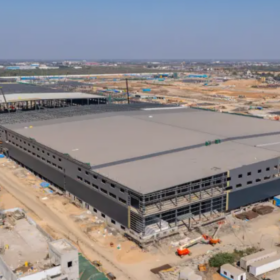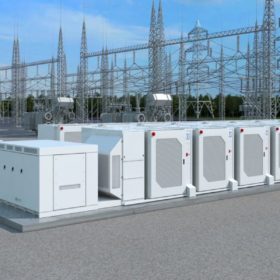
Can India become a global hub for high-voltage equipment manufacturing
For years, India has depended on imports of transformer bushings particularly at higher voltage levels. For India to become a global manufacturing hub, the gaps in product design, manufacturing technology must be addressed with a sense of urgency.
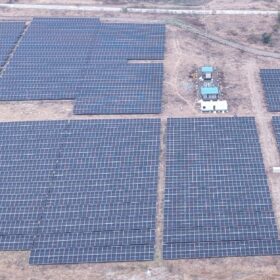
How relaxed FDI norms could transform India’s renewable energy sector
The amended FDI policy for investments from countries sharing land borders with India aims to attract capital and technology for critical solar components—such as cells, wafers, and polysilicon—while retaining strategic control of assets with domestic entities. Industry experts say it could accelerate renewable energy infrastructure and manufacturing, but it also carries risks, including pricing pressure, making careful regulatory oversight essential.

Siemens Energy India Q1 profit rises 34.9% to INR 313 crore
Siemens Energy India Ltd has reported a 26% year-on-year increase in revenue to INR 1,911 crore and a 34.9% rise in profit after tax to INR 313 crore for the quarter ended December 2025 (Q1 FY2026). The company’s order backlog expanded 37.6% to INR 17,599 crore.

Beyond the panels: How India’s solar growth and PM-KUSUM are redefining the grid
While policy discussions focus on solar tariffs and farmer incentives, we see a different challenge emerging on the factory floor: Infrastructure Redefinition. The humble transformer is being asked to do things it was never originally designed to do.
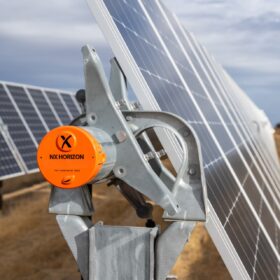
Nextpower enters multi-year gigawatt-scale steel frame supply agreement with Jinko Solar (U.S.) Industries
Nextpower plans to expand its steel frame manufacturing capacity in the southeastern United States to enable direct supply to Jinko Solar’s module manufacturing facility in Jacksonville, USA.
Why transformers are the unsung heroes of India’s green revolution
We are preparing for a future where transformers are dynamic energy hubs, stabilizing a grid that is constantly fluctuating between charging EVs and absorbing solar export.
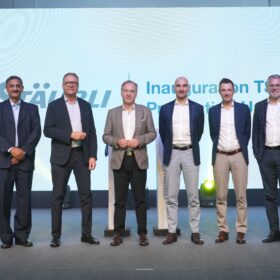
Stäubli expands Indian manufacturing footprint with $10 million PV connector investment
Swiss electrical connector manufacturer Stäubli has invested $10 million to expand its manufacturing facility in Bangalore, strengthening its presence in India’s fast-growing solar PV market. The expanded site will produce MC4-Evo1 and MC4-Evo2 connectors using fully automated assembly lines to support domestic and global demand.

Electrolyser selection and balance-of-plant engineering for renewable integrated hydrogen projects
Green hydrogen will scale not through isolated technology breakthroughs, but through disciplined engineering execution. Projects that embed electrolysers within robust, flexible, and future-ready Balance-of-Plant architectures will define the next phase of industrial decarbonisation and renewable energy integration worldwide.

New Delhi to host Bharat Electricity Summit 2026 from 19–22 March
The four-day Summit will focus on the entire power value chain, including power generation (with emphasis on clean energy systems such as solar, wind, hydro, green hydrogen, etc.), transmission and distribution, energy storage, and energy efficiency solutions.
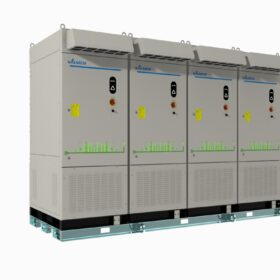
Delta Electronics India to supply 110 MW of power conditioning systems for Prostarm’s battery storage projects
Delta Electronics India will supply 100 units of its made-in-India 1.1 MW bi-directional power conditioning systems to Prostarm’s battery energy storage projects for power utilities, including Bihar State Power Generation Company Ltd and Adani Electricity Mumbai Ltd.