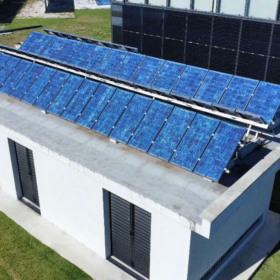
Extensive testing validates reuse of 23-year-old second-life polycrystalline solar modules
Researchers in Brazil tested second-life polycrystalline PV modules for two years and found they retained 87–88% of their original power, with minimal degradation and stable performance. Despite strong sustainability and circular economy benefits, economic incentives remain limited due to the declining cost and short warranties of new state-of-the-art silicon PV modules.
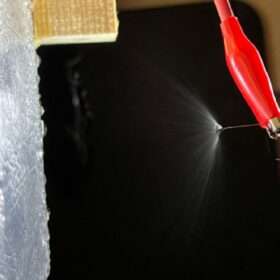
Electrospray cooling can boost PV panel performance with minimal water use
Researchers in Turkey optimized electrospray cooling for PV panels, achieving optimal power output with minimal water use and a compact, energy-efficient setup. Their study identified irradiance, flow rate, voltage, and nozzle distance as ideal parameters.
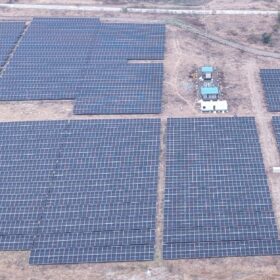
How relaxed FDI norms could transform India’s renewable energy sector
The amended FDI policy for investments from countries sharing land borders with India aims to attract capital and technology for critical solar components—such as cells, wafers, and polysilicon—while retaining strategic control of assets with domestic entities. Industry experts say it could accelerate renewable energy infrastructure and manufacturing, but it also carries risks, including pricing pressure, making careful regulatory oversight essential.
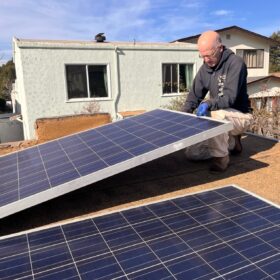
DIY plug-in solar shows $0.65/W potential in US market
Achieving a system cost of $0.65/W through the secondary market and do-it-yourself assembly demonstrates a viable pathway for US plug-in solar to provide immediate utility bill relief to renters and apartment dwellers.

IFC loans $125 million for polysilicon factory in Malaysia
The International Finance Corporation is providing an A Loan to Malaysian polysilicon producer OCI TerraSus that will partly finance the development of a semiconductor-grade polysilicon production facility in Sarawak, Borneo.
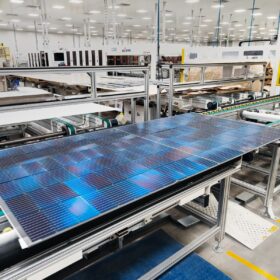
Premier Energies commissions 5.6 GW solar module facility in Telangana
Premier Energies Ltd has commenced trial production at its 5.6 GW solar module manufacturing facility in Seetharampur, Telangana. The new facility produces G12R TOPCon modules with zero busbar (0BB) architecture.

Tongwei moves into hybrid heterojunction back contact solar cell technology
Tongwei is partnering with GS-Solar and Golden Solar to develop a large-scale manufacturing facility for hybrid heterojunction back-contact (HBC) solar cells that combine heterojunction passivation, tunneling oxide and polysilicon structures used in TOPCon designs, and the grid-free front-side architecture typical of back-contact technologies.

Brazil PV module imports fall 24% to 17.9 GW in 2025
Greener says Brazil imported 17.9 GWp of PV modules in 2025, with distributed generation accounting for 79% of volumes despite a slowdown in installations.
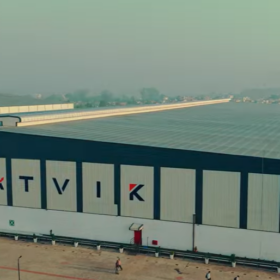
Saatvik Solar secures INR 638.26 crore TOPCon cell order
Saatvik Solar has secured an INR 638.26 crore order for the supply of G12R TOPCon PV cells. The order is scheduled to be executed by March 2027.

US ITC opens Section 337 probe into global TOPCon supply chain
The US International Trade Commission (ITC) has opened a Section 337 investigation into tunnel oxide passivated contact (TOPCon) solar cells, modules, panels, and related products following a complaint by First Solar, naming 47 entities across 11 countries as respondents.