How relaxed FDI norms could transform India’s renewable energy sector
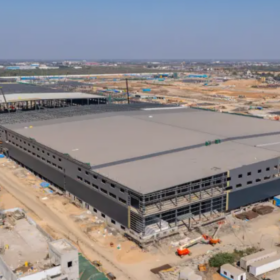
The amended FDI policy for investments from countries sharing land borders with India aims to attract capital and technology for critical solar components—such as cells, wafers, and polysilicon—while retaining strategic control of assets with domestic entities. Industry experts say it could accelerate renewable energy infrastructure and manufacturing, but it also carries risks, including pricing pressure, making careful regulatory oversight essential.
Land acquisition completed for 40 GWh capacity awarded under PLI ACC scheme
Land acquisition has been completed for 40 GWh of manufacturing capacity awarded under India’s production-linked incentive (PLI) scheme for advanced chemistry battery cells (ACC).

ReNew secures $95 million equity investment for commercial & industrial renewable energy portfolio
LeapFrog leads with $50 million, joined by co‑investors Emerging Market Climate Action Fund and Carlyle AlpInvest.

Why Gujarat continues to attract large-scale renewable energy investment
As India’s clean energy ambitions scale, investment will increasingly follow regions that can deliver outcomes, not just intent. Gujarat’s experience suggests that long-term renewable growth depends as much on institutional preparedness and grid integration as it does on natural resources.

Advait Energy Transitions upgraded to ‘A-/Stable’ by Crisil Ratings
CRISIL has upgraded Advait Energy Transitions Ltd’s long-term rating to A-/Stable from BBB+/Stable, and short-term rating to A2+. In addition, the total bank loan facilities rated have been enhanced from INR 110 crore to INR 405 crore.
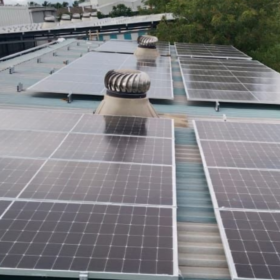
What India needs to accelerate sustainable lending post-budget
The next phase of green growth will depend on how quickly capital reaches businesses that are ready to modernize, become energy-efficient, and invest in cleaner production systems. The question is no longer whether sustainable lending will grow, it is how fast we can remove the barriers preventing it from scaling.
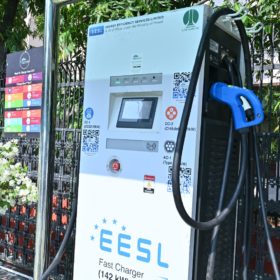
India’s EV sector secured INR 2.23 lakh crore in investments, just 18% of the capital needed by 2030: IEEFA
IEEFA states that bridging the INR 10.3 lakh crore investment gap over the next five years will require moving beyond traditional subsidy-led approaches toward structural risk-sharing mechanisms that lower the cost of credit and attract private capital in the electric mobility sector.
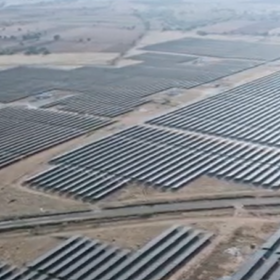
Clean Max Enviro Energy raises INR 921 crore from anchor investors
Clean Max Enviro Energy Solutions has raised INR 921 crore from anchor investors ahead of its initial public offering that opens for public subscription today (Feb. 23, 2026).

Global Energy Alliance announces $25 million Grids of the Future Accelerator platform
The Global Energy Alliance for People and Planet has launched the India Grids of the Future Accelerator platform to modernize power distribution, integrate renewable energy and storage, and prepare India’s grids for rapid demand growth.
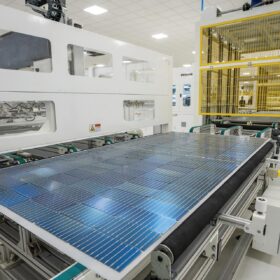
GREW Solar raises INR 1,050 crore from overseas investors to fuel capacity expansion
GREW Solar has raised INR 1,050 crore in a new funding round led by Bay Capital Investment Ltd, with participation from two other institutional investors. The company said it will use a significant portion of the proceeds to expand the manufacturing capacity of its upcoming PV cell facility from 3 GW to 8 GW.