Electrospray cooling can boost PV panel performance with minimal water use
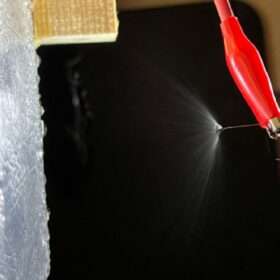
Researchers in Turkey optimized electrospray cooling for PV panels, achieving optimal power output with minimal water use and a compact, energy-efficient setup. Their study identified irradiance, flow rate, voltage, and nozzle distance as ideal parameters.
Japanese researchers achieve world record efficiency of 12.28% for copper gallium selenide solar cell
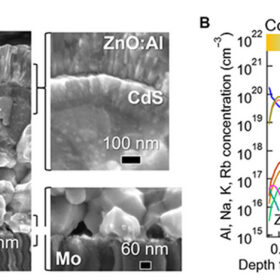
Researchers in Japan have achieved a 12.28% efficiency in a copper gallium selenide solar cell, the highest reported for indium-free wide-bandgap chalcogenide absorbers in the 1.65–1.75 eV range. The device uses aluminum-engineered films with a back-surface field and optimized cadmium sulfide buffer layers to enhance voltage, reduce recombination, and improve overall performance.

Design-led innovation: Enabling widespread and reliable solar PV adoption
Energy requirements evolve over time, and solar systems must be designed with adaptability in mind. Design-led innovation supports scalability through modular architectures that allow systems to expand or integrate complementary technologies such as energy storage.

Delta Electronics India, TNSDC launch a Centre of Excellence in Robotics & PLC Automation
Delta Electronics India, in collaboration with the Tamil Nadu Skill Development Corp. (TNSDC), has inaugurated a Centre of Excellence (CoE) in Robotics and PLC Automation at the College of Engineering, Bargur, in Krishnagiri district, Tamil Nadu.
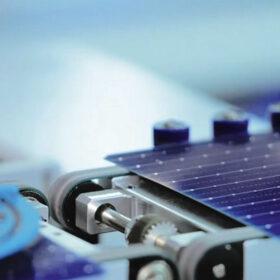
JinkoSolar achieves record-breaking 26.66% efficiency for TOPCon solar cell based on M10-size wafer
The Chinese manufacturer claims the new efficiency result sets a world record for industrial-scale TOPCon solar cells on M10-size wafers. The achievement was verified by an undisclosed independent third-party organization in China.

NexWafe, Talon PV sign 7 GW solar wafer supply agreement
Under the terms of the deal, Germany’s NexWafe will supply its ultrathin solar wafers to Talon PV’s planned 4.8 GW TOPCon solar cell manufacturing plant in Texas. Initial qualification work will take place at a pilot production line at Fraunhofer ISE’s Photovoltaic Technology Evaluation Center.
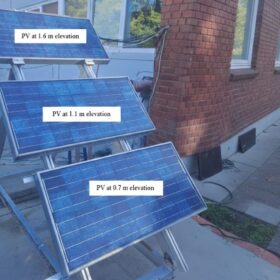
The effects of solar module elevation on ground-mounted PV
Scientists in Hungary found that ground-mounted PV modules at an intermediate elevation of 1.1 m achieve the highest efficiency and power output due to improved airflow and reduced cell temperature. Their study also estimated a levelized cost of electricity of $0.0843/kWh and 577.78 kg CO₂ mitigation over 25 years, while noting results are specific to concrete surfaces.

The real question for India: Should we chase the next technology or optimize global best practices?
By combining proven global practices with solutions designed for Indian conditions, offering choices for different customer needs, and continuing to invest in meaningful innovation, India can build a solar ecosystem that is resilient and inclusive.
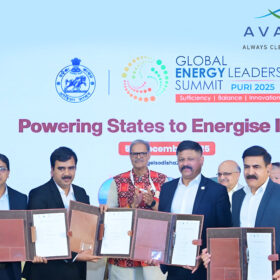
Avaada Group partners with GRIDCO, IIT-Bhubaneswar to set up green hydrogen Centre of Excellence in Odisha
Avaada Group has signed a Memorandum of Understanding (MoU) with GRIDCO and IIT-Bhubaneswar to establish a state-of-the-art Centre of Excellence (CoE) in Odisha focused on integrated research, innovation, and technology development in green hydrogen.

Fraunhofer ISE achieves 30.6% efficiency for perovskite-silicon tandem based on industry-standard bottom TOPCon cell
Researchers at Fraunhofer ISE have developed a perovskite-silicon tandem solar cell using a TOPCon bottom cell with standard textured front surfaces. Their results show that TOPCon bottom cells can perform comparably to heterojunction cells in tandem devices in terms of shunt resistivity, supporting scalable, cost-effective industrial production.