Top News
CleanMax secures $575 million for 1 GW renewable energy projects in India
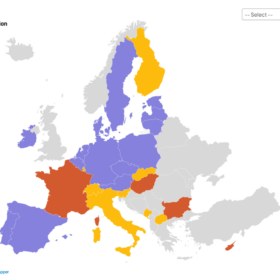
Europe creates map to locate available capacity in power grids

Amara Raja Energy & Mobility reports 16% YoY revenue growth in Q4 FY26
Website Relaunch & Scheduled Downtime
Big news: tomorrow at 11:00 AM CEST, the pv magazine website will go offline as we launch our new website experience.
The new website will be available shortly after the relaunch is completed.

pv magazine Webinar
pv magazine Webinar
pv magazine Webinar
pv magazine Webinar

Media Kit 2025
Make your order for 2025 to reach your audience the right way.

Amplify your brand presence with the leading trade media platform for the solar and storage industry.
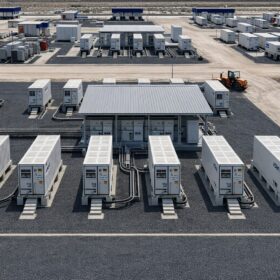
Adani Green Energy commissions 3.37 GWh battery energy storage system at Khavda

ACME Solar signs PPA for 300 MW/1,200 MWh assured peak power project
Brazil increases import tax on batteries at local manufacturer’s request
DAS Solar, UNSW build tunnel back-contact solar cell with 27% efficiency, lower silver content
DCR module premiums more than offset input cost pressures: GREW Solar CEO
Markets & Policy
Featured
Why grid modernisation must precede energy transition targets
Rajasthan Solar Association calls for pragmatic transition framework for ALMM List II implementation
The industry body warns of supply disruptions, rising costs, MSME stress and project delays if ground-level readiness is ignored.
Vikran Engineering strengthens solar portfolio with 969 MW PM-KUSUM project acquisition
Vikran Engineering, a diversified EPC player, has acquired the remaining 51% equity stake in NOPL Solar Projects Pvt Ltd, which is developing a 969 MW (AC) grid-connected solar power project under Component C of the PM-KUSUM Scheme in Maharashtra.
Bluebird Solar appoints Rohit Tikku as CEO to lead PV cell, BESS foray
Bluebird Solar, a solar PV module manufacturer, has appointed Rohit Tikku as its chief executive officer (CEO) to drive the company’s expansion into solar cell production, EPC services, and energy storage solutions.
Sahaj Solar forms JV for 750 MW solar module manufacturing facility in UAE
Sahaj Solar has announced a joint venture with Clarion Investments LLC to set up a 750 MW solar module manufacturing facility in the UAE. The facility will target supply to Gulf Cooperation Council (GCC) countries, including the UAE, Qatar, Bahrain, Saudi Arabia, Kuwait, and Oman, as well as the US market.
BII, CIP launch $300 million platform to support renewables project development in India
British International Investment (BII) has launched a $300 million platform to accelerate renewable power projects in India, with $150 million each from BII and Danish fund manager Copenhagen Infrastructure Partners (CIP).
Installations
Featured
India’s energy transition is becoming an economic story
JSW Steel, Bharatia and Carbon Iceland sign MoU for large-scale green methanol project in India
JSW Steel Ltd, Bharatia and Carbon Iceland International will jointly explore the development of a large-scale green methanol (e-methanol) project in India. The proposed 300 ktpa project aims to utilise CO₂ emissions from JSW Steel’s operations in district Raigad, Maharashtra, and convert them into eMethanol using green hydrogen produced from renewable energy sources.
Meeting the challenges of long life time PV on buildings
As Europe’s first generations of integrated PV systems age, researchers and industry actors are only beginning to explore the long-term realities of maintenance, compatibility and repair.
India added 2.7 GW of open-access solar capacity in Q1 2026, says Mercom
Open-access solar installations were up 170% year-over-year from 1 GW added in Q1 2025.
Lidl launches 2.24 kWh battery in Germany for €299
The battery supports 1,000 W input and 800 W output, is compatible with most balcony PV systems, and can be optionally app-controlled via a dedicated app.
Rajasthan could save INR 5,500 crore annually by replacing new coal with solar-plus-battery storage, says new report
Rajasthan could save about INR 5,500 crore annually and up to INR 57,000 crore over a decade by avoiding new coal-based power generation and adopting solar power + battery storage, resulting in lower power costs, according to a new report by Climate Risk Horizons.
Technology
Featured
Japanese scientists achieve world record 25.14% efficiency for perovskite-CIGS tandem solar cell
The Hydrogen Stream: Ireland’s LCOH on par with Morocco, Brazil
Fraunhofer ISE, in collaboration with Irishi energy company ESB, developed a methodology showing that Ireland is a competitive location for renewable power-to-X and green hydrogen production with costs comparable to Morocco, South Africa, and Brazil, supported by strong wind resources, policy backing, and infrastructure potential.
Advait Energy Transitions, Norway’s TECO sign MoU for hydrogen fuel cell manufacturing in India
Advait Energy Transitions Ltd has signed a memorandum of understanding (MoU) with Norway-based TECO Fuel Cell Technology AS to establish a framework for hydrogen fuel cell manufacturing in India. The agreement was signed at the 3rd India–Nordic Summit in Oslo.
Waaree Clean Energy to develop multi-technology green hydrogen project for TMEIC Industrial Systems
Waaree Clean Energy Solutions, a wholly owned subsidiary of Waaree Energies Ltd, has secured an order to develop a multi-technology green hydrogen project at the facility of TMEIC Industrial Systems India in Tumkur, Karnataka.
Siemens Energy India Q2 FY2026 revenue up 27.4% YoY
Siemens Energy India Ltd has reported a revenue from operations of INR 2,394 crore for the quarter ended March 2026, marking a 27.4% year-on-year increase from INR 1,880 crore in the corresponding quarter of FY 2025. Profit after tax increased 52.4% YoY to INR 375 crore.
“India’s battery energy storage market is transitioning from aggressive tendering to execution-led scale” — Ratul Puri, Chairman, Hindustan Power
Ratul Puri, Chairman of Hindustan Power, speaks to pv magazine about the key challenges in scaling renewable energy deployment, the growing role of battery storage and carbon markets, and Hindustan Power’s strategy in supporting India’s clean energy transition.
Manufacturing
Featured
China invalidates First Solar TOPCon patent in major win for JinkoSolar
Ganesh Green Bharat FY 2026 revenue crosses INR 1,000 crore
The company expects FY27 revenue in the range of INR 1,500 crore to INR 1,700 crore.
Chinese wafer producers build inventory ahead of expected Q3 demand recovery
In a new weekly update for pv magazine, OPIS, a Dow Jones company, provides a quick look at the main price trends in the global PV industry.
Fujiyama Power to set up 1.2 GW TOPCon solar cell manufacturing facility in Madhya Pradesh
Fujiyama Power Systems, which currently operates a 1 GW mono PERC solar cell manufacturing facility in Uttar Pradesh, plans to set up an additional 1.2 GW TOPCon solar cell manufacturing facility in Madhya Pradesh as part of its strategy to expand its presence in the on-grid rooftop solar segment.
Solar industry cost-cutting sparks record wave of spontaneous glass breakage
Instances of cracks in PV module glass started appearing about five years ago. Spontaneous glass breakage is now one of the solar industry’s top issues, but manufacturing pressures and a lack of standards are hindering solutions.
Saatvik Green Energy Ltd crosses INR 45.48 billion in FY26 revenue
Saatvik Green Energy Ltd reported FY26 revenue from operations of INR 45.48 billion, up 111% year on year (YoY), marking the company’s highest-ever annual revenue performance.
Energy Storage
Bluetti launches new storage systems for balcony PV
Vision Mechatronics, HyCooker sign agreement to launch zero-emission hydrogen cookstoves globally
Indian deep-tech company Vision Mechatronics and Netherlands-based HyCooker BV have signed a strategic cooperation agreement for the global rollout, localized manufacturing in India, and international commercial sales of advanced hydrogen-burning cookstoves.
India curtailed 300 GWh of renewable energy in Q1 2026 due to transmission constraints, says Ember
With the right regulatory changes, battery energy storage systems offer a credible near-term solution to the country’s rising grid gaps.
E-trucks: Unlocking the next frontier in India’s logistics transformation
As battery costs decline, charging networks mature, and financing models improve, e-trucks can move deeper into mainstream freight. India’s logistics transformation is no longer only about moving goods faster. It is about moving them with lower emissions, stronger energy security and better lifecycle economics.
Hydrovert Energy develops 5 kVA to 50 kVA hydrogen fuel cell stationary gensets
Pune-based startup Hydrovert Energy has developed hydrogen fuel cell-based stationary power generators ranging from 5 kVA to 50 kVA for long-duration backup power in commercial and industrial applications. The systems use hydrogen as the sole fuel input, irrespective of whether the hydrogen is produced from fossil fuels, renewable energy-powered electrolysis, or nuclear energy pathways.
Oman power company signs 2.7 GW PPA for continuous wind-solar-storage project
The gigawatt-scale solar, wind and battery project developed by O-Green Energy expected to provide round-the-clock power. It is part of a push from Nama Power and Water Procurement to secure 7 GW solar, 3 GW battery storage capacity by 2030.
Opinion & Analysis
Featured
China TOPCon module prices hold steady as supplier price gap widens
Solar approaches 3 TW, but the industry faces new challenges
Global solar PV capacity reached around 2,974 GW by end-2025, with nearly 698 GW added in 2025. The sector, however, is shifting from rapid deployment to integration challenges, as high penetration rates drive curtailment, storage demand, grid constraints, and evolving policy and market designs.
Can India’s steel pipe industry lead the global hydrogen infrastructure build-out?
One of the biggest constraints in the hydrogen economy today is the lack of transport infrastructure. Moving hydrogen remains expensive and logistically complex without pipelines.
Hybrid energy systems: Combining solar, wind & storage for maximum efficiency
Hybrid energy systems are set to play a crucial role in shaping the future of energy infrastructure. With advancements in smart grid technologies, artificial intelligence, and predictive analytics, these systems will become even more efficient and adaptive. They offer a scalable and sustainable solution to meet rising energy demands while reducing carbon emissions and enhancing energy security.
How distributed energy resources can help India meet its 2030 clean energy targets faster
Distributed energy resources, rooftop solar, C&I open-access systems, behind-the-meter storage, solar agricultural pumps, microgrids, share one decisive advantage: deployment speed. And speed is not the only advantage. Power consumed where it is generated avoids the 15-22% aggregate technical and commercial losses in India’s distribution networks.
The hidden engine: Why testing infrastructure is the real bottleneck in India’s green energy race
India’s 500 GW renewable energy target by 2030 dominates every policy conversation. Capacity additions, auction pipelines, transmission corridors; these are the metrics that make headlines. But there is a quieter, less glamorous constraint that could undermine all of it: the country’s under-investment in testing and certification infrastructure for clean energy equipment.