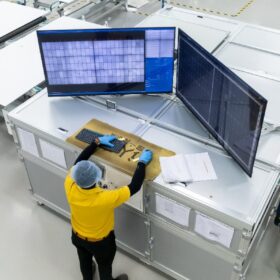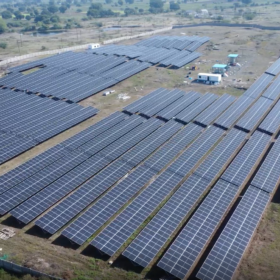
Solar 2.0: India’s solar revolution moves beyond gigawatts
India’s first solar decade was about speed and volume. The next will be about intelligence and performance. High-efficiency modules, bifacial panels, agrivoltaic systems, advanced power electronics, and integrated battery storage are no longer emerging technologies — they are the infrastructure of Solar 2.0.
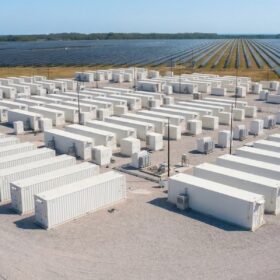
When battery imbalance turns 11% of capacity into stranded energy
A 350 MWh battery storage system in Europe is delivering significantly less energy than expected due to cell imbalance, with the battery management system failing to detect the issue, tradable energy volumes chronically overestimated, and weekly balancing cost exposure reaching up to €110,000 ($127,745). This is one of the real-world failure scenarios to be examined at the Battery Business & Development Forum on April 1.
Exide Industries invests INR 450 crore in lithium battery arm
Exide Industries Ltd has invested INR 450 crore into its wholly owned subsidiary Exide Energy Solutions Ltd (EESL) through a rights subscription to equity share capital.
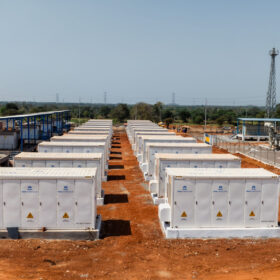
India added 547 MWh of battery energy storage capacity in 2025, says Mercom
With this, the nation’s cumulative installed battery energy storage capacity crosses 1 GWh.
Land acquisition completed for 40 GWh capacity awarded under PLI ACC scheme
Land acquisition has been completed for 40 GWh of manufacturing capacity awarded under India’s production-linked incentive (PLI) scheme for advanced chemistry battery cells (ACC).
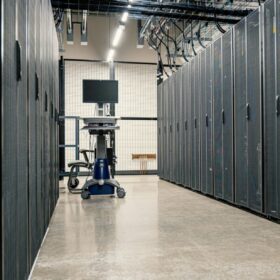
Why battery storage is becoming the engine of AI growth
Data centers are using batteries to run more AI on the same grid connection.
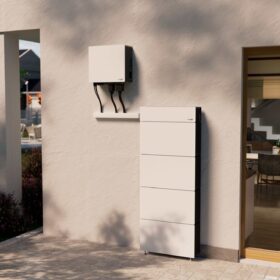
SolarEdge launches Nexis hybrid inverter and high-voltage battery for residential PV
The Nexis solution combines a flexibly configurable hybrid inverter with a modular high-voltage battery offering up to 14 kW charging capacity per stack. The inverter delivers 8–20 kW AC power, supports up to 200% DC oversizing, and features IP65-rated design with integrated backup power.
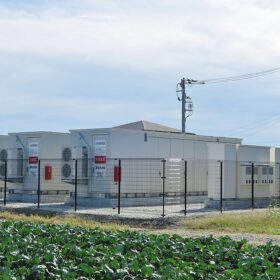
Panasonic claims world’s first trial of cybersecurity monitoring for grid-scale BESS
A Japanese joint-pilot will test grid-scale BESS with a range of local and remote attack vectors, with cybersecurity monitoring to watch for indications of anomalies.

Japan’s TDK Corp. to invest INR 4,000 crore in Haryana for battery energy storage unit
TDK Corp., a Japanese multinational electronics company, has proposed an investment of INR 4,000 crore in Haryana to set up a battery energy storage unit. A delegation from the company met Haryana chief minister Nayab Singh Saini to discuss the proposed investment.

Vikram Solar appoints Sameer Nagpal as CEO
Sameer Nagpal will lead Vikram Solar through its next phase of growth as it advances its strategic roadmap to deepen backward integration, scale manufacturing capacity, and strengthen its position in the global renewable energy market.