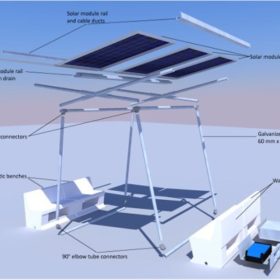
A solar pavilion for India’s rooftops
India’s energy transition will not succeed without rooftop PV and roll-out is hindered not only by a lack of household finance, but by the fact many of the nation’s flat roofs are enjoyed by residents. Germany’s international development agency has proposed a solution.
Another bidding extension for 75 MW solar in Uttar Pradesh
Developers now have until July 14 to bid for setting up the capacity in the Uttar Pradesh Solar Park. Technical bid shall be opened on July 15.
Fourth Partner Energy raises US$125 million in equity funding from Norwegian and US investors
The Hyderabad-based corporate solar solutions provider would use the funds towards business expansion across Indian and International markets as it targets 3 GW of installed solar capacity by 2025.
Sterling and Wilson Solar’s order book grew 72% in FY2021
However, one-off exceptional events in the fourth quarter hit the solar EPC player’s overall fiscal performance. These included a prime subcontractor going bankrupt in Australia, rising module prices, and increased freight costs.
Madhya Pradesh will have a 950 MW solar plant operational in two years
The Indian State of Madhya Pradesh is going to host a 950 MW solar power plant in the Chhatarpur district. The PV plant is planned to be completed by March 2023. Land proceedings for the plant have already been completed. The tender inviting developers will be issued by November, and the developer selection process completed by January 2022.
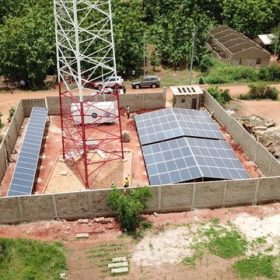
EXIM Bank to finance rural electrification solar projects in Togo
The Togolese government aims for universal access to electricity this decade and for half of its power to come from clean energy sources under the National Development Plan (NDP).
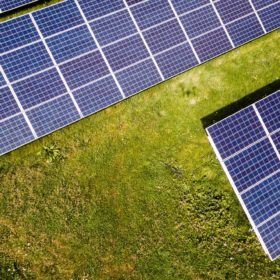
New renewables cheaper than legacy coal or gas for almost half the world’s population
Electricity bill payers in nations as diverse as China, India, Germany, and Greece should be aware new solar projects can now generate electricity cheaper for them than legacy coal and gas-fired plants.
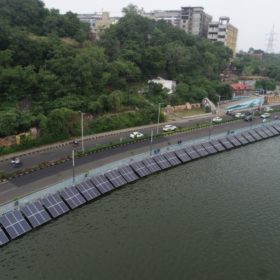
Solar panels by the side of a lake
A 500 kW solar project by the side of the Bada Talab in Bhopal, Madhya Pradesh, uses 1540 PV panels supported through cantilever frame. The installation runs 1.2 km.
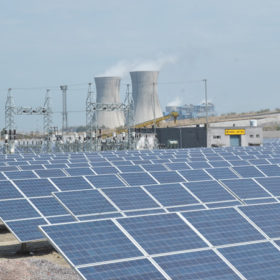
NTPC doubles its 2032 renewable energy target to 60 GW
The coal-dominated power producer is shifting towards renewables as part of its commitment towards sustainable power generation and safeguarding the environment. It is also undertaking extensive study and experimentations in the areas of carbon capture and hydrogen.

Goldi Solar supplies 12 MW of modules for a Tamil Nadu project
The Gujarat-based solar panel manufacturer and EPC provider has completed the supply of 72GN polycrystalline modules with peak power output of 335W each for a project installation by Peak Qualish Systems.