Wood Mackenzie predicts 2-year decline in global solar inverter demand
Wood Mackenzie’s latest analysis expects market uncertainty in China, Europe and the U.S. to cause two consecutive years of contraction in the global solar inverter market, forecasting a fall to 577 GWac this year and 523 GWac in 2026.
Italy assigns 1.1 GW in PV auction open to projects with ‘non-Chinese’ modules
The procurement exercise, the second solar auction under Italy’s Fer X incentive scheme and first to exclude the use of Chinese solar modules, cells and inverters for projects above 1 MW in size, concluded with a final average price of €0.06637/kWh.
Waaree secures ALMM approval for 5.25 GW solar cell capacity
Waaree Energies’ advanced solar cell manufacturing facility located at Degam, Chikhli, Navsari (Gujarat) has been ALMM enlisted with a total approved capacity of 5.25 GW per annum. This includes 3,923 MW of n-type TOPCon cells and 1,328 MW of p-type PERC bifacial cells.

RenewSys secures 300 MW POE encapsulant supply order from ICON Solaren
RenewSys has secured an order to supply its latest-generation POE (polyolefin elastomer) encapsulants to ICON Solaren, supporting the production of high-efficiency solar modules. POE delivery is scheduled between January 2026 and April 2026.
Maxeon expands legal action against Aiko and its distributors in Germany
Maxeon has filed a lawsuit in Germany claiming Aiko Solar, and four of its German product distributors, breached a patent related to its back contact solar technology. It is the third such lawsuit Maxeon has opened against Aiko.

New report charts path to securing raw material supply chains for India’s EV growth
A new report by KPMG outlines strategies to enhance resilience and competitiveness in India’s electric vehicle (EV) ecosystem amid sharply rising demand for critical raw materials such as lithium, nickel, cobalt, and rare earth elements.
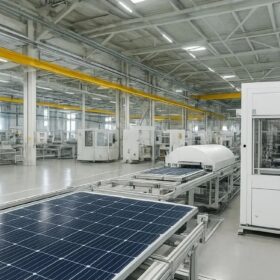
Onix Solar secures INR 148.80 crore non-DCR module order from Vikran Engineering
Onix Solar will design, manufacture, and supply 193,550 non-DCR TOPCon 620 Wp solar modules for the Vikran project.
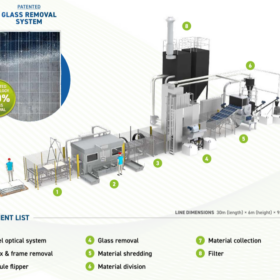
Jakson to set up high-tech solar PV module recycling line in partnership with Europe’s Ecoprogetti
Jakson Engineers Ltd will set up a high-tech solar PV module recycling plant capable of recycling around 5,00,000 PV modules, or approximately 13,500 tonnes of modules per year, recovering critical materials and enabling responsible end-of-life solar management. The recycling line will be supplied by Ecoprogetti.

Canada opens review into anti-dumping duties on Chinese PV modules, laminates
Canada’s International Trade Tribunal is running an interim review of the country’s anti-dumping and countervailing duties on solar modules and laminates from China, following a request to exclude flexible solar panels that affix to curved surfaces.
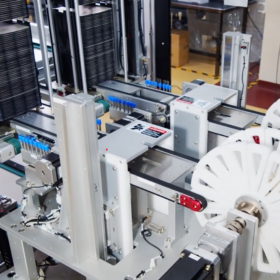
Solex Energy partners with Malaysia’s TT Vision on solar manufacturing automation and talent development
Solex Energy Ltd has signed a non-binding Memorandum of Understanding (MoU) with Malaysia-based automation technology company TT Vision Holdings Berhad to collaborate on advancing solar manufacturing automation, engineering excellence, and talent development in India.